
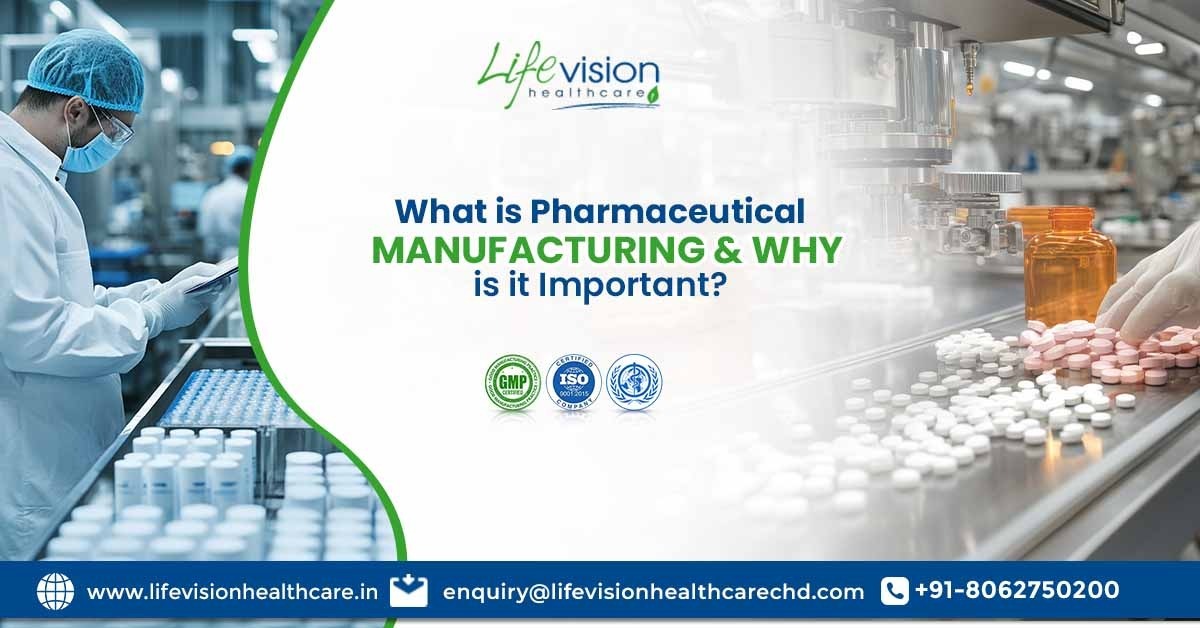
Pharmaceutical manufacturing is kind of the whole, messy process of building, making, checking, packaging, and shipping medicines that help prevent, manage, and treat illnesses. In day to day terms it means taking active pharmaceutical ingredients (APIs), plus other starting materials, then transforming them into products that are safe, effective, and reliably consistent in quality. Those final goods might come up as tablets, capsules, syrups, injections, ointments, and even “ nutraceutical “ kind of style formulations.
What is pharmaceutical manufacturing?
This work is a tightly supervised industrial chain that takes scientifically designed drug formulations and turns them into medicines people can buy in the real market. At the same time it has to stick to strict quality control systems, regulatory requirements, and Good Manufacturing Practices (GMP). That combination is what supports safety, effectiveness, repeatable batch performance, and overall compliance, not just in theory but in audits and inspections too.
Usually the manufacturing path includes things like
- Research and formulation development
- Sourcing raw materials and testing them
- Manufacturing and processing steps
- Quality assurance, along with quality control
- Packaging and labeling
- Storage and distribution
So in the end, every step gets closely observed, more or less, so the product quality stays steady and so the organization can meet national as well as international healthcare standards.
Why is pharmaceutical manufacturing Important?
This whole process kinda feels really essential, because it keeps a steady stream of medicines moving along, and that supports public health plus better patient outcomes. Also, if manufacturing systems weren’t reliable, then healthcare providers would have a much harder time handling treatment demands, not to mention that nearly everything would drag on, even when people need the drugs like now, urgently.
1. Keeps essential medicines available, all the time
A major role of pharma products manufacturing is to make sure key medicines stay accessible in high enough quantities. Besides, trustworthy pharmaceutical manufacturers in India help reduce shortages of critical drugs that are used for chronic conditions, infections, and those sudden medical emergencies.
2. Protects product quality and safety
Pharmaceutical companies operate with strict quality standards to make sure their medicines are safe, effective and free from contamination. On top of that, quality control testing checks each batch so it actually matches the required specifications before it ever reaches the market.
3. Strengthens healthcare infrastructure
Hospitals, clinics, pharmacies and healthcare professionals depend on pharmaceutical manufacturers for an ongoing supply of medications. Even so, efficient manufacturing systems also help reinforce healthcare delivery, and that actually shows up in patient care day to day.
4. Encourages medical innovation
Pharmaceutical products manufacturing helps move scientific ideas into real, usable healthcare solutions. Manufacturers collaborate with researchers and healthcare specialists, to develop new treatments, more advanced ways of drug delivery, and improved formulations too.
5. Contributes to Economic Growth
The pharmaceutical industry creates jobs across research, production, quality assurance, logistics, sales, and distribution. It also supports exports and contributes to industrial development, overall, which is pretty big for the economy.
Types of Pharmaceutical products Manufacturing services
In the Pharmaceutical industry in India Different manufacturing models serve different business and healthcare needs.
1. Branded manufacturing
In this model, pharmaceutical companies produce medicines under their own registered brand name, and then they market them straight to healthcare professionals, hospitals, and consumers. Kinda like, everything stays in the house.
2. Generic manufacturing
Generic manufacturers make medicines that share the same active ingredient and same therapeutic impact as branded drugs, but only after the patent expires. These products are often aimed at helping affordability and accessibility, not just casually, but in a more direct way.
3. Third-party manufacturing
With third party manufacturing, companies outsource production to specialized manufacturers. Plus, this setup makes it easier for businesses to launch products without sinking money into manufacturing facilities in the first place.
4. Contract manufacturing
Contract manufacturing is when a company produces pharmaceutical products based on a client’s requirements, such as specific formulations, packaging necessities, and branding direction. Essentially the customer sets the blueprint.
5. Private label manufacturing
Private label manufacturing lets businesses sell products under their own brand, while an experienced pharmaceutical company handles the manufacturing work. So the business gets the label, and someone else does the production part.
Key Stages in the Pharmaceutical Manufacturing Process
| Stage | Purpose |
|---|---|
| Raw Material Testing | Ensures ingredient quality and compliance |
| Formulation Development | Creates effective medicine formulations |
| Production | Converts raw materials into finished products |
| Quality Control | Verifies safety, potency, and consistency |
| Packaging | Protects products and provides information |
| Distribution | Delivers medicines to healthcare channels |
Common Challenges in Pharmaceutical products Manufacturing
In the pharmaceutical industry in India, even with technological advancements, manufacturers often deal with a bunch of operational issues that tend to pop up over and over.
Regulatory Compliance
Manufacturers must keep up with regulations that continue to shift, these are released by health authorities and other regulatory agencies. If compliance slips, the result can be product recalls, penalties, or even limitations on where products can be sold.
Quality Consistency
Keeping quality steady across large production batches, means there has to be strict process controls, more advanced equipment and constant oversight. Without that kind of attention, even tiny variations can turn into a much bigger headache later on.
Supply Chain Disruptions
Raw material scarcity, transportation slowdowns and wider global supply chain troubles can mess with production schedules, and they can also influence how medicines get to patients or pharmacies, in time.
Cost Management
Trying to balance product quality with regulatory demands, while also controlling operational expenses, stays a major challenge for most pharmaceutical manufacturers.
Technological Upgrades
Manufacturers often need to invest, not just once but repeatedly, in automation, digital monitoring systems, and newer manufacturing technologies, so they can remain competitive.
Pharmaceutical Manufacturing vs. Pharmaceutical Marketing
| Pharmaceutical Manufacturing | Pharmaceutical Marketing |
|---|---|
| Produces medicines | Promotes and sells medicines |
| Focuses on production and quality | Focuses on market reach and sales |
| Production | Converts raw materials into finished products |
| Requires manufacturing facilities | Requires marketing and distribution networks |
| Governed by GMP standards | Governed by marketing regulations |
| Handles formulation and packaging | Handles brand promotion and customer acquisition |
How Pharmaceutical Manufacturers in India Benefits Businesses
Businesses entering the pharmaceutical sector can leverage manufacturing services. Thus, it expands product portfolios and reaches new markets without significant infrastructure investments.
Key benefits are basically the following:
- Quicker product launches, and smoother timing sometimes
- Access to certified manufacturing facilities, with the right setups
- Less capital spending, and lower upfront money
- Regulatory guidance and documentation, sort of the paperwork support
- Scalable production capacity, grow without stress
- Better product quality and consistency, more dependable results
Conclusion
Pharmaceutical manufacturing is like one of those foundational pieces of the global healthcare system, and it does so much more than people think. It supports the making of safe, reliable, and good quality medicines that can genuinely help patients and keep health services doing their job smoothly. Whether a company goes for branded production, generic medicines, contract manufacturing, or uses third party services, pharmaceutical products manufacturing still plays a role in meeting growing demand. At the same time it has to stay lined up with regulations, product standards, and all the required documentation. Also as health needs keep shifting, efficient pharma products manufacturing will keep mattering, not only for making sure medicines are available, but also for sparking fresh ideas and generally improving public health outcomes in the long run.
Frequently Asked Questions (FAQs)
Q1: What is pharmaceutical manufacturing, in plain words?
A: This is basically the work of making medicines from raw materials, while everything stays safe, controlled, and actually effective, using regulated production methods that are doable and make sense.
Q2: What are the main kinds of pharmaceutical products manufacturing?
A: The major categories include branded manufacturing, generic manufacturing, third-party manufacturing, contract manufacturing, and private label manufacturing, depending on how a company wants to present itself, and position.
Q3: Why does quality control matter so much?
A: Quality control makes sure medicines meet safety requirements, strength, potency purity, and the right regulatory requirements before they ever get to store shelves.
Q4: What does GMP mean in pharmaceutical products manufacturing?
A: GMP basically means Good Manufacturing Practices, which are rule based guidelines that help make sure medicines get produced and tracked in a steady way, with the quality expectations that are required, kind of all the way through the process.
Q5: How can third-party pharmaceutical products manufacturing help companies?
A: With third party manufacturing, companies can hand off production, which can cut the upfront investment costs a lot, let them focus more on brand building and sales, and usually reach the market sooner.